
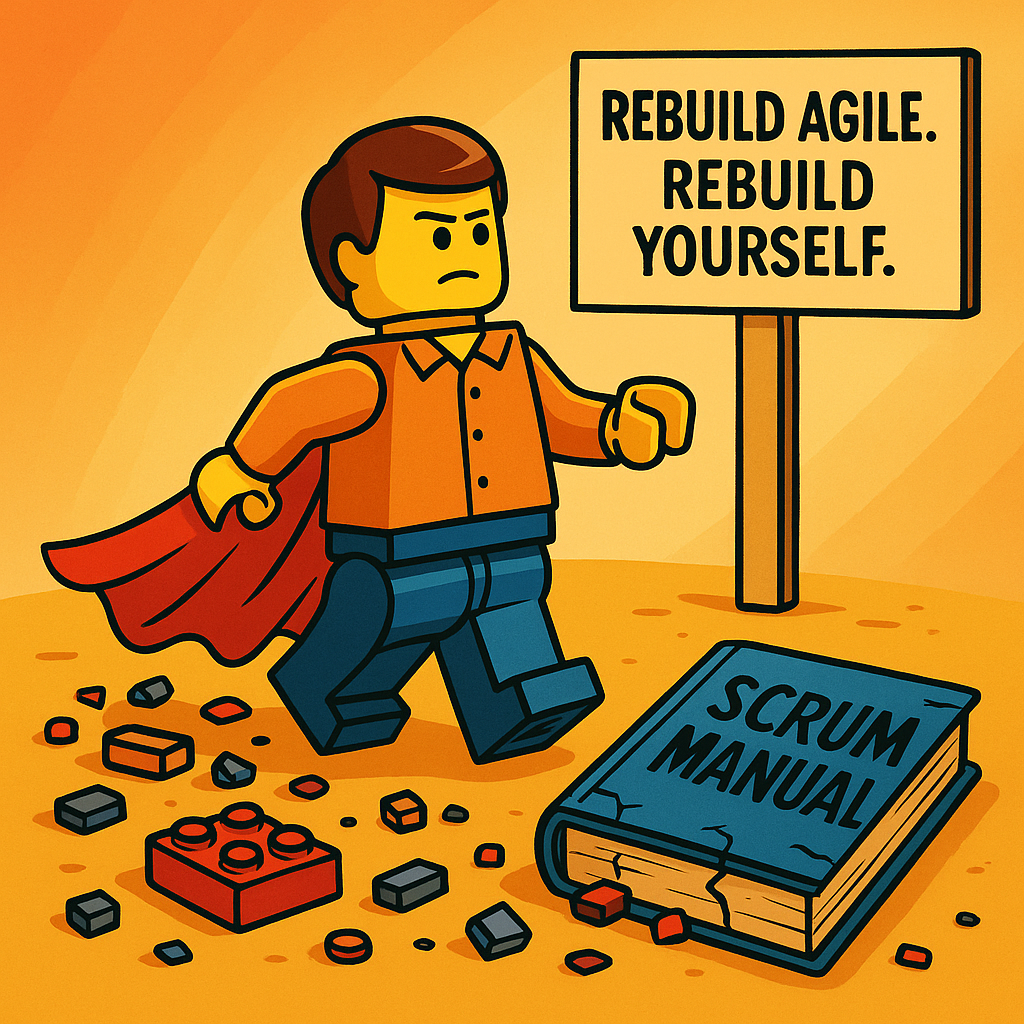

Most Scrum Masters won’t make it.
And no, this isn’t fear mongering. It’s a forecast. A wake up call. A brutal truth the Agile world has been tiptoeing around for too long. We’ve entered a new era of Agile: leaner, faster, and brutally outcome driven. And it’s leaving behind anyone still clinging to checklists, ceremonies, and outdated dogma. The days of hiding behind “facilitation” and vague servant leadership without delivering measurable value are over.
If your biggest contribution is running the stand up, updating velocity charts, and sending calendar invites for retros, I have bad news: you’re already being replaced. The market is shifting. And it’s not waiting for you to catch up. Layoffs are targeting Agile roles first. Job postings for Scrum Masters have dropped by over 15% in the past two years. Major organizations have collapsed entire Agile departments. Hiring managers aren’t being shy anymore. They’re saying it outright:
“We don’t need someone to run meetings. We need someone who drives value.”
So if your defense is “I follow the Scrum Guide” or “my team likes me,” that’s not going to cut it. Not in 2025. Not in a market that values adaptability, outcomes, and strategic thinking above ritual. The role isn’t dying. But what it takes to survive in it is changing fast. And most won’t.

The Data Tells the Story
Let’s look at what’s really happening:
- Job listings for Scrum Masters are down 15% since 2022.
- Popular resources like Scrum Master interview guides have seen their download numbers cut in half.
- Companies like Capital One have eliminated entire Agile teams.
- And in cross-role hiring data, Scrum Master is one of the only roles in Agile experiencing negative growth.
These are not isolated incidents, they’re signals. And they all point to one conclusion: the market is recalibrating.
Why It’s Happening

The Market Is Overcrowded
When the Agile boom hit, everyone wanted in. Certifications were marketed like golden tickets. Get certified on a weekend, land a job Monday. But many entered the field without deep understanding, coaching skill, or systems thinking. Now companies are overwhelmed with applicants who know the theory but can’t deliver transformation.
We Prioritized Rituals Over Results
Let’s be honest. Too many Scrum Masters became protectors of process rather than champions of outcomes. They ran clean ceremonies but didn’t challenge priorities, coach product thinking, or drive throughput. Businesses noticed. And they started asking, “What exactly are we paying for?”
Agile Has Evolved– Many Haven’t
The rest of the ecosystem moved forward. DevOps matured. Product strategy got sharper. Agile scaled across the enterprise. But many Scrum Masters kept playing the same playbook from 2015. The language changed. They didn’t. And that gap is starting to show.

Who Will Survive (and Thrive)
This isn’t a death sentence for the role — it’s a forced evolution. The Scrum Masters who will make it into the next chapter of Agile look very different.
They are:
- Outcome-Focused: Able to clearly articulate how their team drives business value.
- Systems Thinkers: Coaching beyond the team level, engaging with leadership and operations.
- Multi-Skilled: Comfortable with delivery metrics, product strategy, stakeholder management.
- Executive Fluent: Able to speak the language of the C-suite, not just the dev team.
They’re not running ceremonies, they’re building capability.
What You Can Do Right Now
If you’re in this role (or trying to get in), here’s how to make yourself irreplaceable:
- Drop the dogma. Learn to adapt your framework, not defend it.
- Upgrade your toolkit. Learn product strategy, OKRs, forecasting, metrics that matter.
- Coach at every level. Don’t just shield your team — transform your org.
- Deliver value, not velocity. Always tie your team’s work to outcomes the business cares about.
This is the part of the post where I could say “it’s going to be okay.” But maybe it’s not — not if you don’t change. The truth is, most Scrum Masters won’t survive the next three years. They’ll be phased out, merged into delivery roles, or passed over for leaders who know how to connect process with value.
But those who do evolve? They’ll become more than Scrum Masters. They’ll become essential.
Want to Future-Proof Your Role?
If this post hit a little too close to home, you’re not alone. That’s exactly why I created Kaizen Vibes Dojo — a live, immersive coaching program designed to help Scrum Masters evolve into strategic, outcome-driven leaders.
We go beyond certification. We focus on what actually gets you hired — and keeps you relevant.
👉 Join the Waitlist to be the kind of Scrum Master companies fight to keep.
Leave a Reply